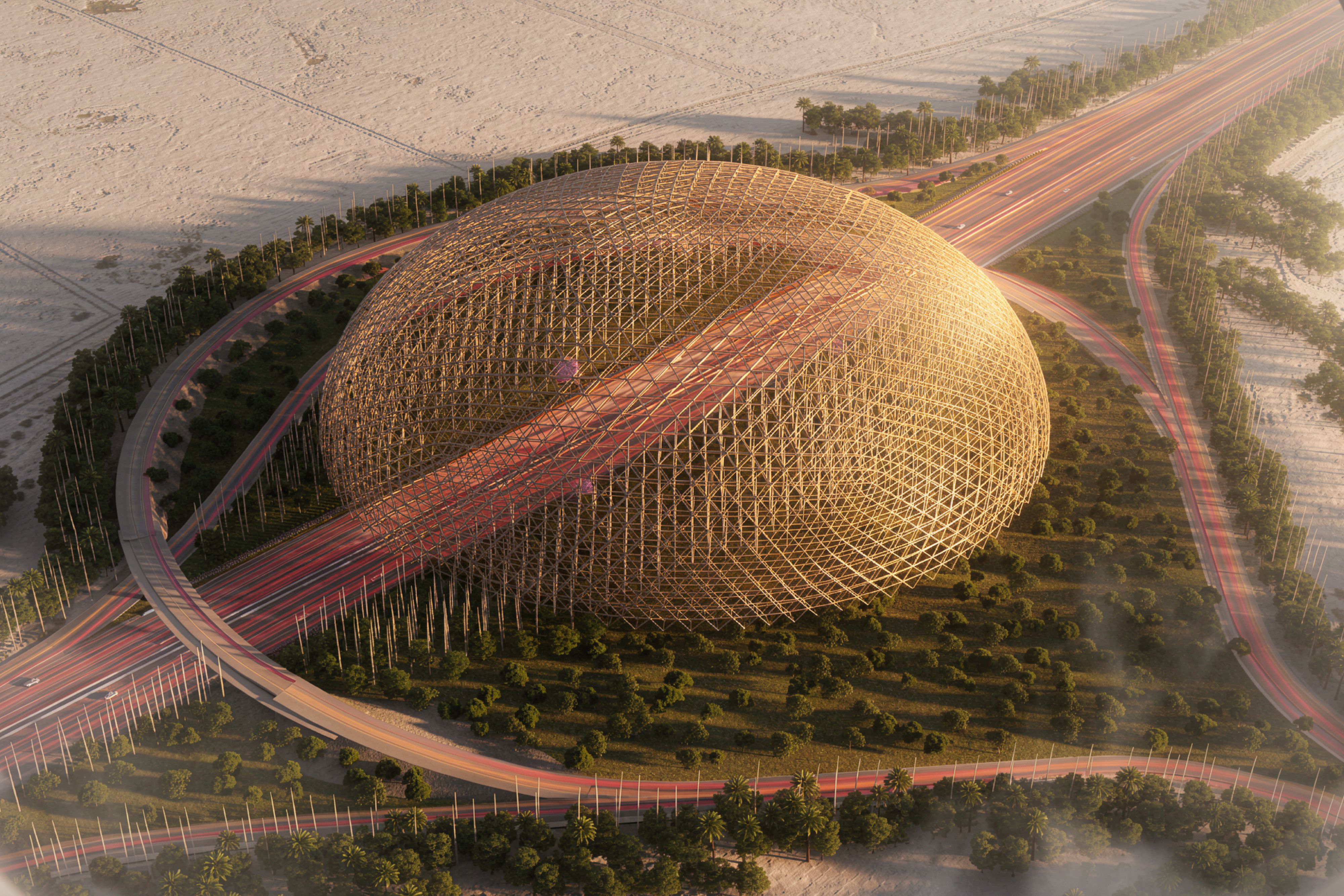
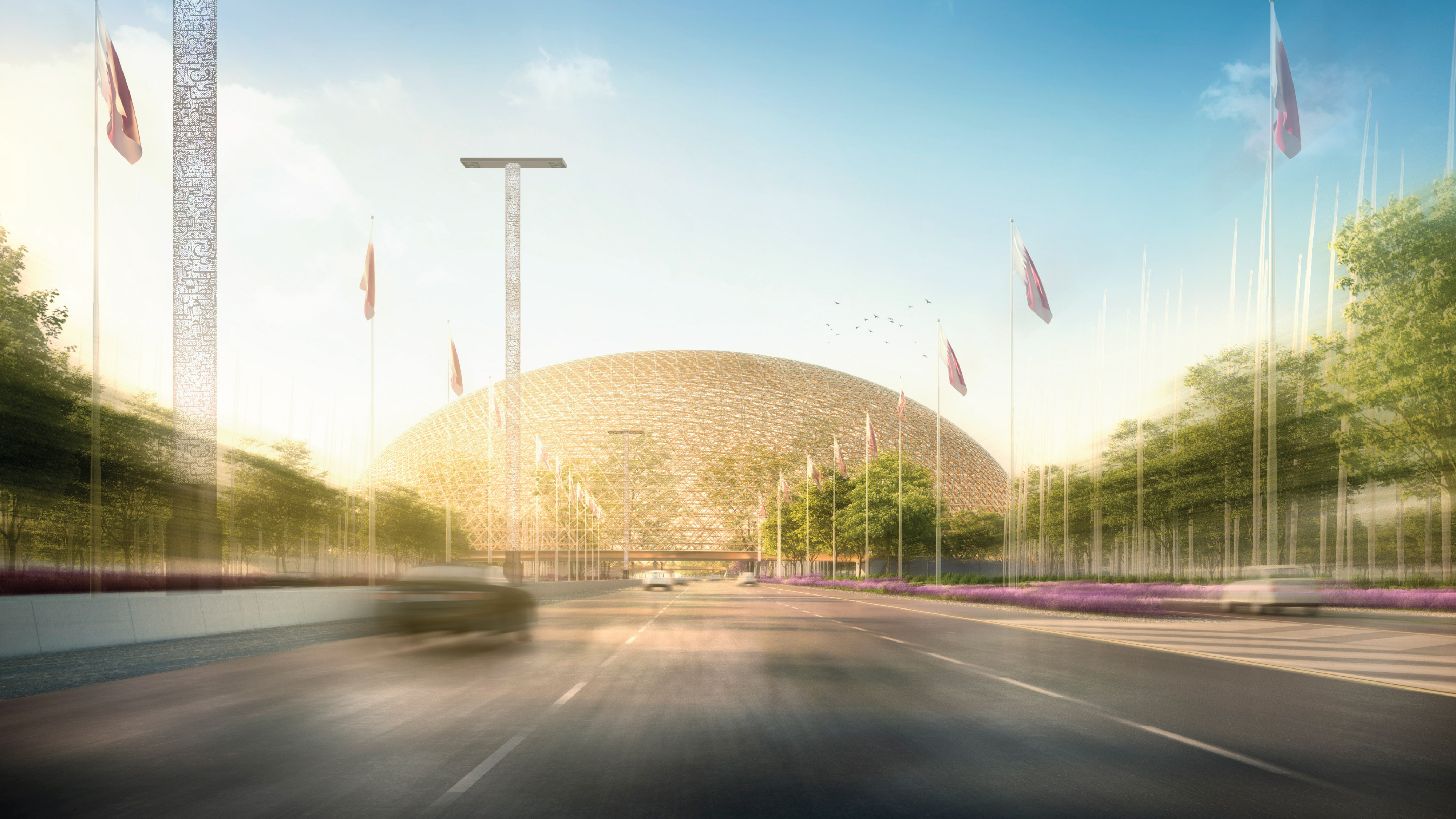
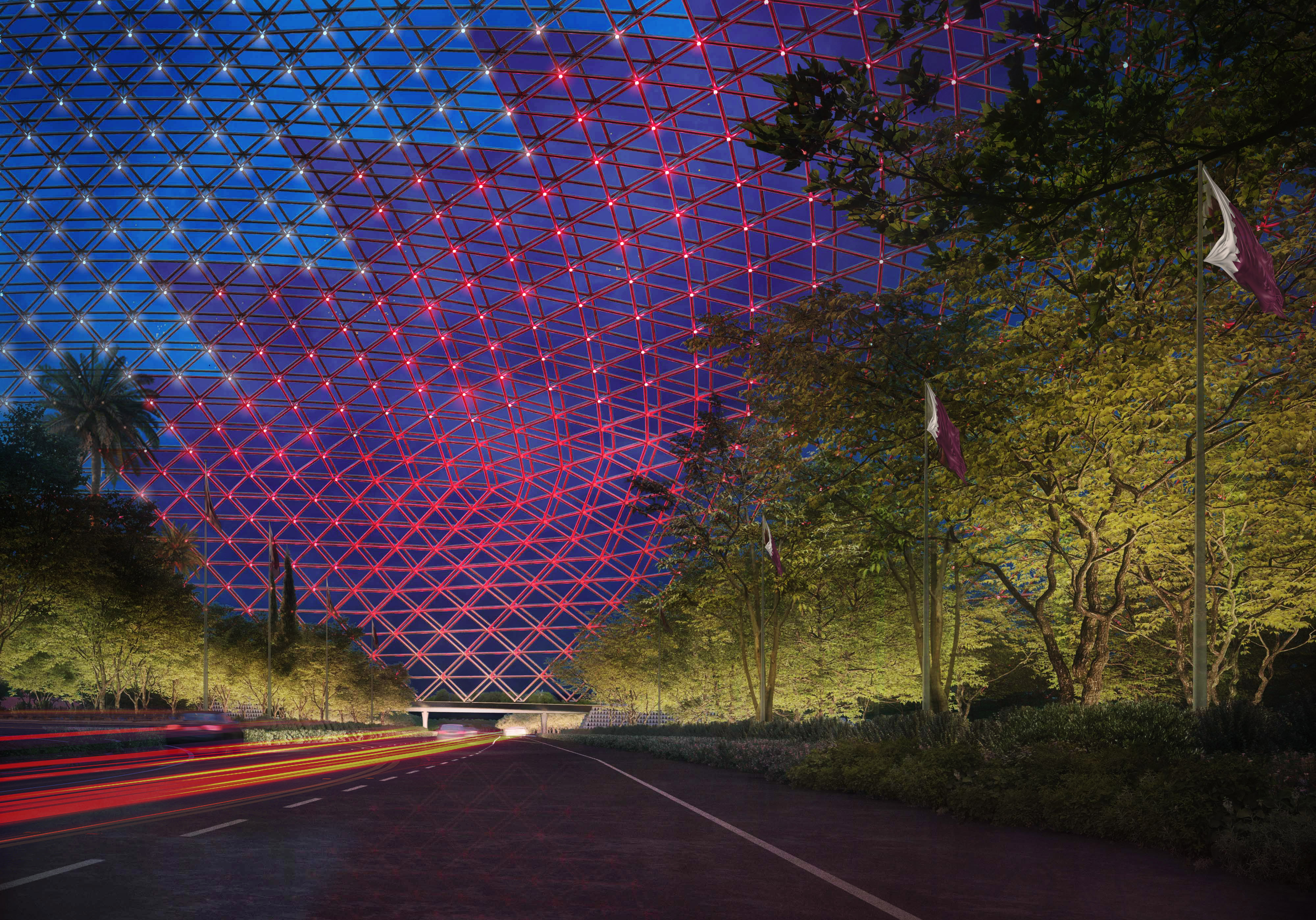
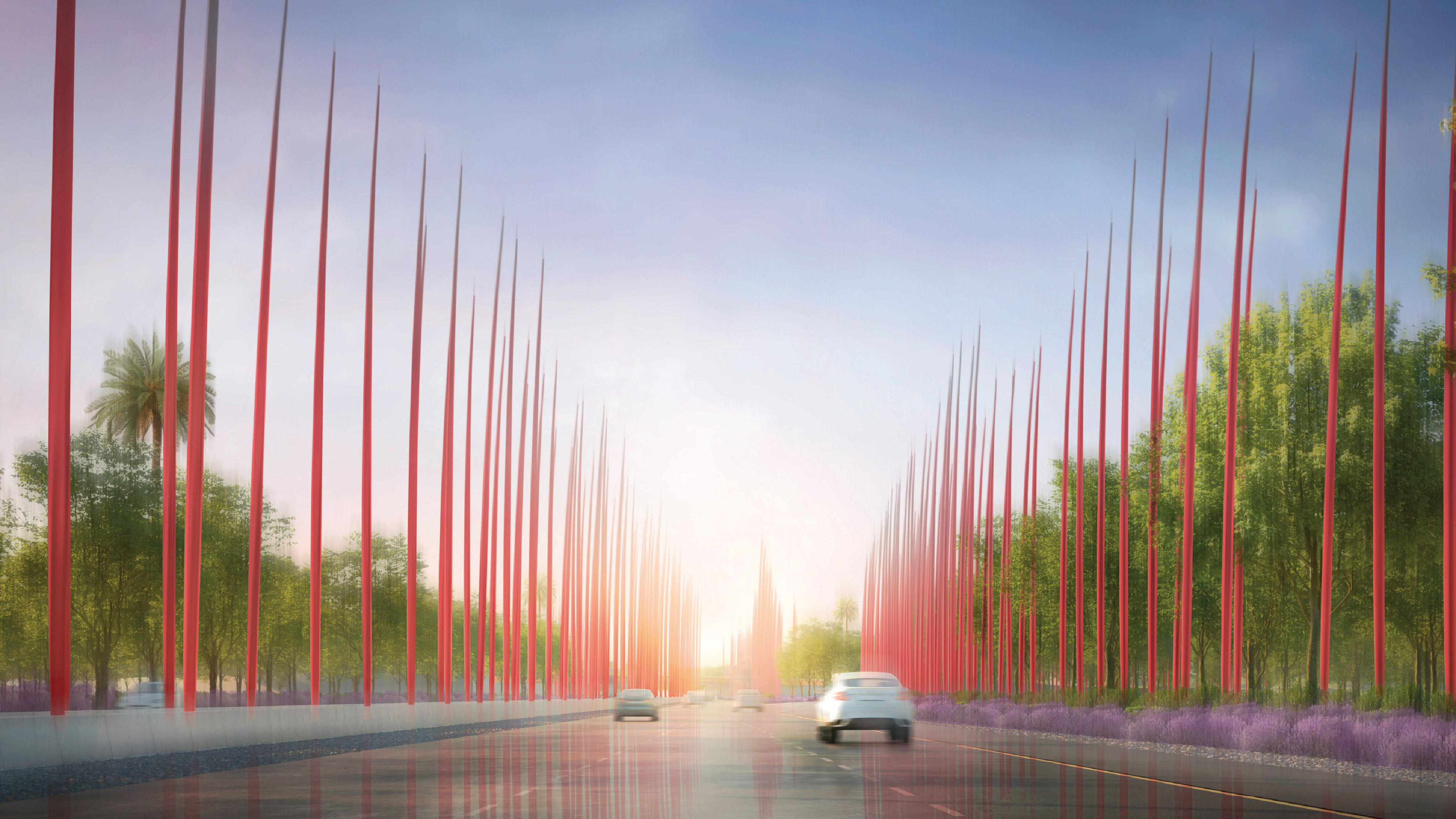
The Regenerative Dome is a design study situated along a highway, linking the capital of a major city on the Arabian Peninsula to the airport with the goal of creating a unique journey for arriving passengers. This intervention—a hybrid of nature, digital technology, and infrastructure— takes place along the visible edges flanking the highway and its associated urban systems, establishing a new sustainable landscape strategy that culminates in an immense, interactive, digital dome.
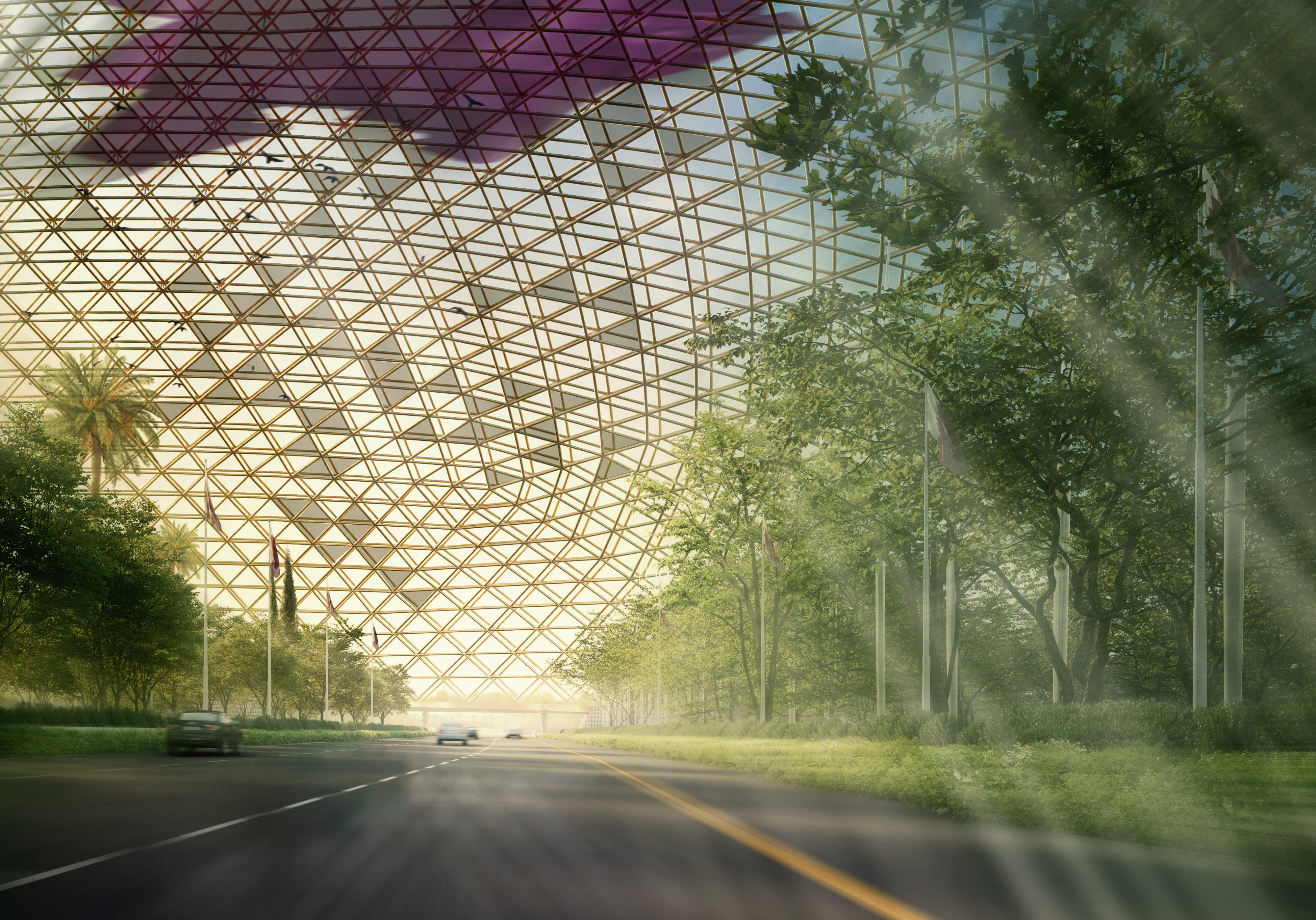
Its strategic location on the largest intersection of the main arteries leading to the capital allows it to have maximum visual impact, observed both from the sky above and from vehicles on the road below. The dome’s architecture is based on a geodesic structure composed of a double layer of steel trusses, allowing for expansive spans that push the limits of the design. This 400-meter interactive dome, the world’s largest, will serve as a powerful media hub on the international scene, displaying a giant, curved screen to broadcast events in real time. At its very core, an immersive biosphere invites travelers to experience a brief respite from the urban amidst the abundant greenery of its self-sustaining ecosystem.
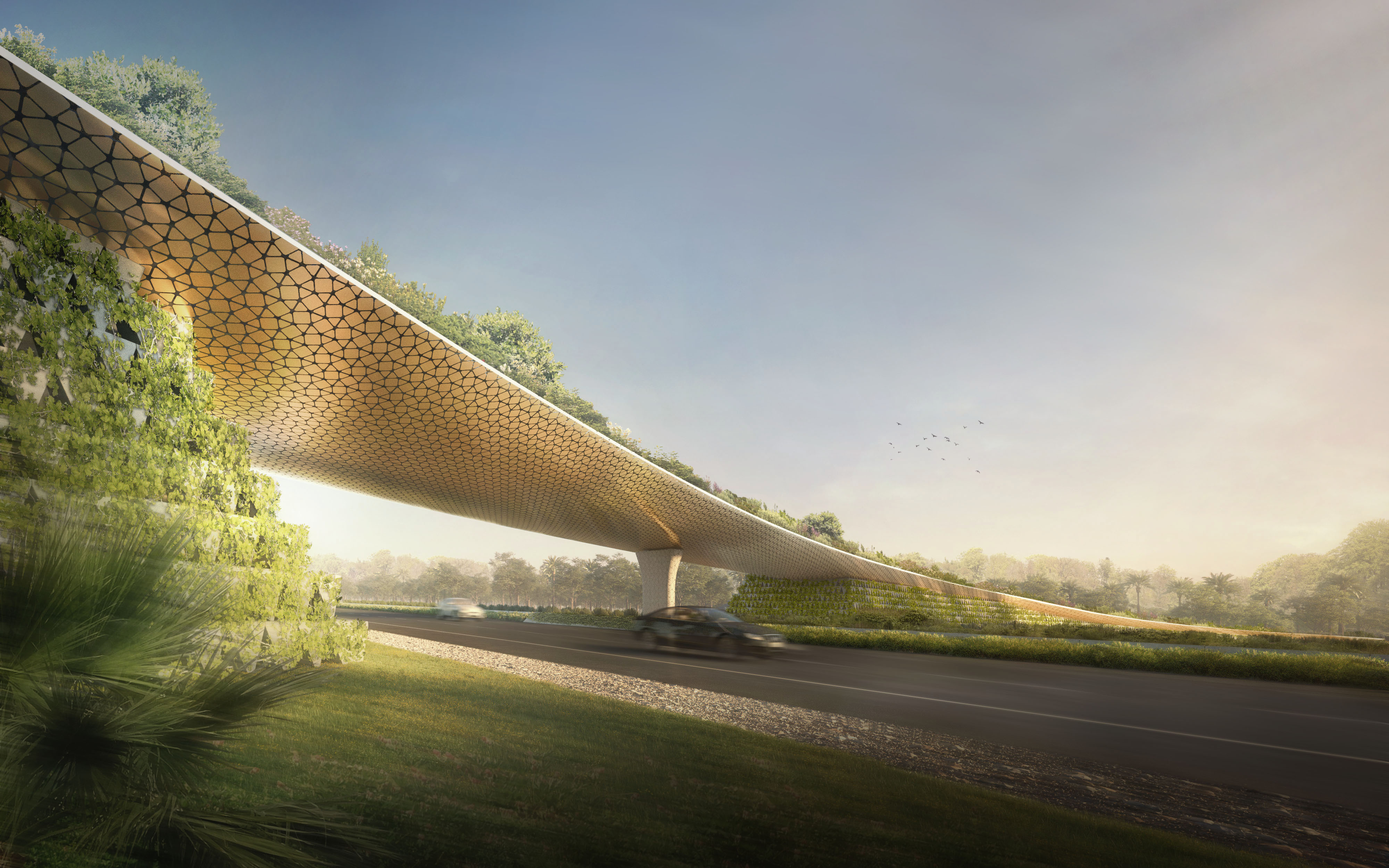
Modular wall plantation pods with triangulated shapes serve as the embankments of the existing bridges, which are adorned with a geometric arabesque pattern and redesigned to incorporate long planted stretches. A recognizable urban beacon, the Regenerative Dome stands as a visionary gesture, a huge shed poised to permanently add its gentle presence to the city’s skyline.